
- Oil prices have surged above US$100 per barrel.
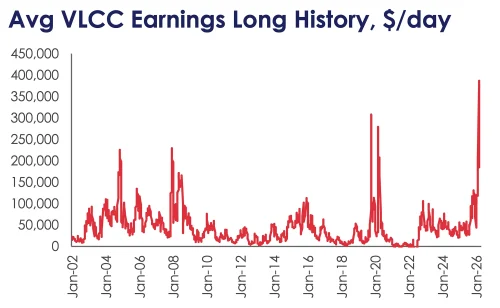
- VLCC spot earnings have been assessed in excess of US$400,000 per day.
- US Gasoline prices at the pump are up roughly 25% in a month.
At first glance, these outcomes appear to be driven purely by geopolitics and physical disruption. However, a critical, but less visible factor sits underneath: the breakdown of trust in maritime information, specifically AIS.
WHAT IS AIS?
AIS (Automatic Identification System) is a shipborne radio system that continuously broadcasts a vessel’s identity, position, course, voyage details, etc. Under the International Maritime Organization (IMO) and the Safety of Life at Sea (SOLAS) convention, AIS is mandatory for most commercial vessels. AIS was originally implemented as a technology to aid in collision avoidance. Over time, it has become foundational in managing marine traffic, search and rescue, maritime security and law enforcement, environmental monitoring, and, not in the least, by commercial shipping and traders.
Despite how fundamental it has become, AIS has its limitations due to its reliance on good-faith reporting and is vulnerable to misuse.
AIS SPOOFING
AIS spoofing is the deliberate transmission of false or misleading information. For a vessel, this can be:
- False position
- False Identity
- “Ghost Vessels”
- False movement patterns
A vessel can also go “dark” or turn their AIS completely off. The distinction is that spoofing communicates misinformation, while going dark hides information. AIS spoofing can show vessels far inland, moving in perfect patterns, effectively “teleporting” great distances in short amounts of time, etc. This creates a digital fog in marine traffic reporting.
This misinformation poses safety and navigational risks, but AIS spoofing can be used for sanctions evasion, concealing ship-to-ship transfers, operating in conflict zones, concealing other illegal activities such as smuggling or illegal fishing, and even as a means of electronic warfare.
AIS spoofing creates unreliable information. Beyond the direct hazard to safe navigation, commodity trade depends on traceable movement of cargo. If the information is not trustworthy, banks may not issue letters of credit, ports may refuse or delay arrivals, and charterers may not be able to confidently vet their counterparties.
DETECTING SPOOFING
The data science team at Carga leverages decades of historical data to detect spoofing and predict dark events. Mesut Kurnaz, data scientist at Carga, notes that, “Detecting AIS spoofing transforms uncertainty into actionable insight, enabling organizations to move beyond raw signals to reliable maritime intelligence they can act on.”
THE STRAIT OF HORMUZ: FROM PHYSICAL CHOKEPOINT TO INFORMATION FAILURE
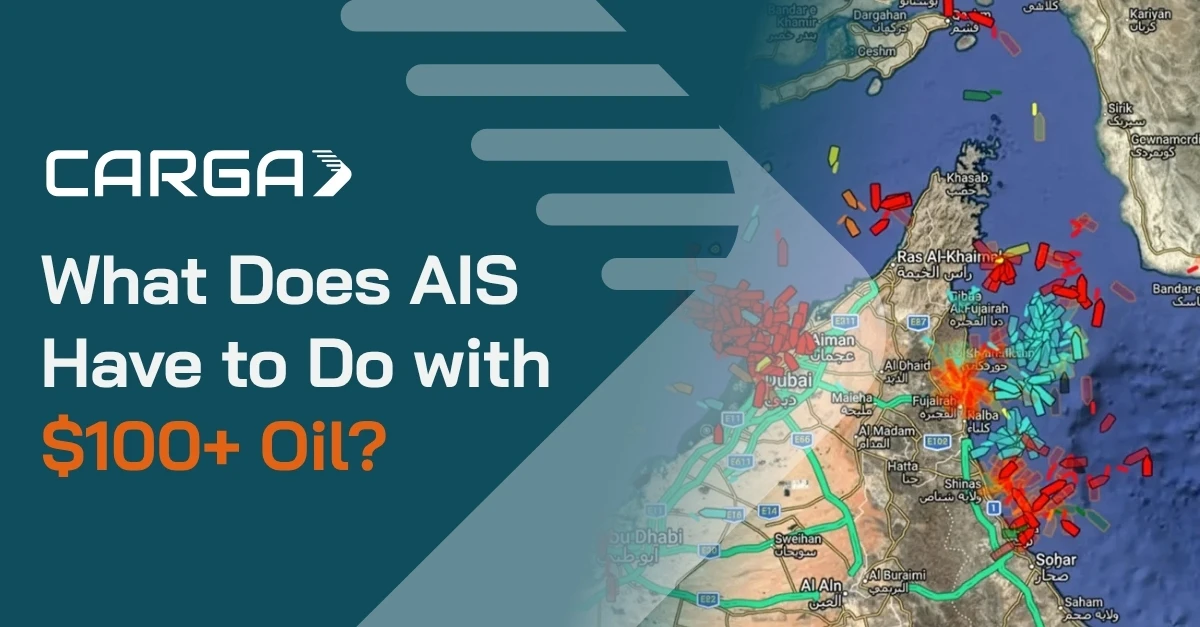
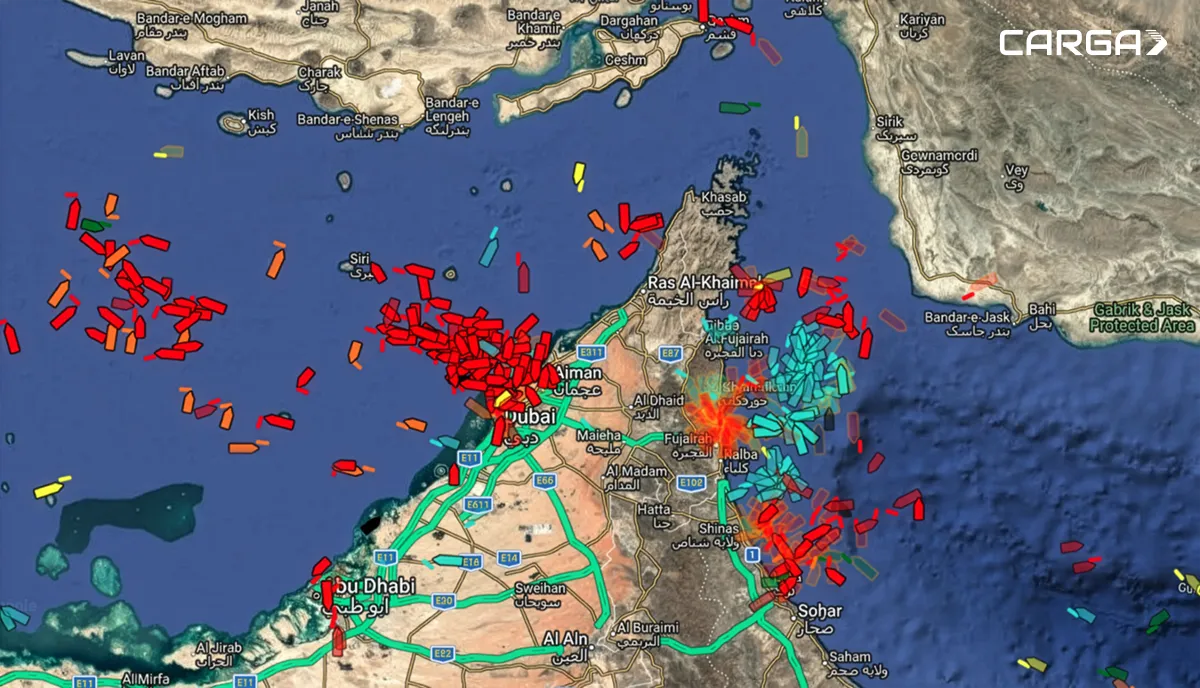
At present, the Strait of Hormuz is effectively closed, with few vessels transiting under special coordinated arrangements. Iran has restricted passage and has issued explicit military threats. Droves of vessels are anchored on both sides of the Strait. AIS has shown abrupt U-turns as well as vessels going dark after experiencing spoofed positions. This has produced a loss of navigational confidence, not just a fear of attack, but uncertainty about where ships actually are.
WHY THIS MOVES OIL PRICES
According to the US Energy Information Administration (EIA), approximately 20% of the world’s daily oil consumption comes from the Persian Gulf, passing through the Strait of Hormuz. With more than 80% of that traffic effectively halted, oil prices recently spiked from US$60 per barrel to over US$100 per barrel.
The tanker market has absorbed the shock violently. With a portion of the global tanker fleet essentially stranded in or around the Persian Gulf, global tanker capacity has been temporarily reduced. This is further exacerbated by owners not being able to obtain insurance or being unwilling to take the risk of entering the area. P&I clubs have been withdrawing war-risk extensions on short notice. Where war-risk insurance is obtainable, premiums have spiked from levels around 0.25% of hull value to 1-3% of hull value or more. Take, for example, a US$100M VLCC, this computes to US$1M+ expense per voyage.
Spot earnings from VLCC’s have surged to above $400k per day. This exceeds levels seen during the 2008 financial crisis and during the spike in floating storage seen in 2020. This is a direct consequence of capacity scarcity and risk pricing.
IN SUMMARY
Spoofing undermines the reliability of maritime data. Not only does this create navigational hazard, but it creates a much broader breakdown in the trust required for global commodity trade. When vessel movement cannot be accurately verified, financing, insurance, and port operations are consequently disrupted, and the flow of oil is constrained even without a full physical blockade. In a critical chokepoint like the Strait of Hormuz, this loss of confidence has reduced usable tanker capacity, driven up insurance and freight costs, and led markets to price in a supply shock pushing crude above $100 per barrel.
WHAT NEXT
At present, comments from Donald Trump suggesting the Strait of Hormuz may reopen in the near term have elevated the US stock markets and contributed to a softening in oil prices. However, the situation remains volatile. The underlying issue of AIS spoofing persists, independent of short-term geopolitical developments, and is expected to continue across high-risk regions. Detecting spoofing and predicting dark events is vital to the cargo industry more than ever.
ABOUT CARGA
Carga is the next evolution in maritime intelligence—accelerating operations with unmatched precision. Built on nearly 30 years of expertise, Carga unifies digitalization, visualization, integrations, and business intelligence into one powerful solution. With the largest satellite collection and data archive in the industry, Carga integrates real-time vessel tracking, terminal management, and digital vetting into a single, API-centric ecosystem.